 Azabudai Hills Tokyo
teamLab Borderless: Tickets, Hours and the Planets Question
teamLab Borderless is the digital art museum in the basement of Azabudai Hills, and the single reason most visitors come to the complex at all. Nothing about buying a ticket is obvious: the adult price moves by ¥2,000 depending on which day and which hour you pick, there is a second pass type that costs ¥12,000, and half the internet is still arguing about whether you should go to teamLab Planets instead. This page settles all three, then lists the private tours that put the ticket in the price and shows you what else to see at Azabudai Hills while you are there.
Quick answer
teamLab Borderless: MORI Building DIGITAL ART MUSEUM occupies level B1 of Azabudai Hills Garden Plaza B in Minato City and reopened there on 9 February 2024, two years after the original Odaiba museum closed. Adults pay ¥3,600 to ¥5,600, children aged 4 to 12 pay ¥1,500, and every ticket carries a fixed entry time. Once you are inside there is no time limit and no way back in if you leave.
Key takeaways
- Adult admission is ¥3,600 to ¥5,600. The date sets the band and the entry hour moves it about ¥800 within the same day, so a quiet Tuesday morning and a Saturday evening are different prices.
- Children 4 to 12 pay ¥1,500, ages 13 to 17 pay ¥2,800, under 4 go free. A ¥12,000 Flexible Pass buys the right to walk in whenever you like on the day.
- Hours are 8:30 to 21:00, last entry an hour before closing, and the museum is shut on Tuesday 25 August, Tuesday 8 September and Tuesday 20 October 2026.
- Book the earliest weekday slot you can face. Tickets open two months ahead and buying at the door costs more than the official site.
- Cheapest guided version: the 3-hour teamLab and Imperial Palace walk at $119.02, with the museum ticket and the timed slot already handled.
- Give it two hours. There is no map, no set route and no re-entry, so eat before you go in.
What teamLab Borderless Actually Is
A museum with no map, on purpose
teamLab is a collective of artists, programmers, engineers and mathematicians founded in Tokyo in 2001 by Toshiyuki Inoko and four university friends. They built websites and shop interiors until Takashi Murakami showed their work in 2011 and pulled them into the art world proper. Borderless is their idea of what a museum could be if the art refused to stay in its room.
Nothing here has a label, and the staff will not give you a floor plan. Artworks cross between spaces, respond to where people stand, and interrupt each other: a flock of crows tears through a room of flowers, the flowers regrow behind them. Stand still for four minutes and the same wall shows you a different season. That is the whole design principle, and it is also why the museum feels bigger than its floor area.
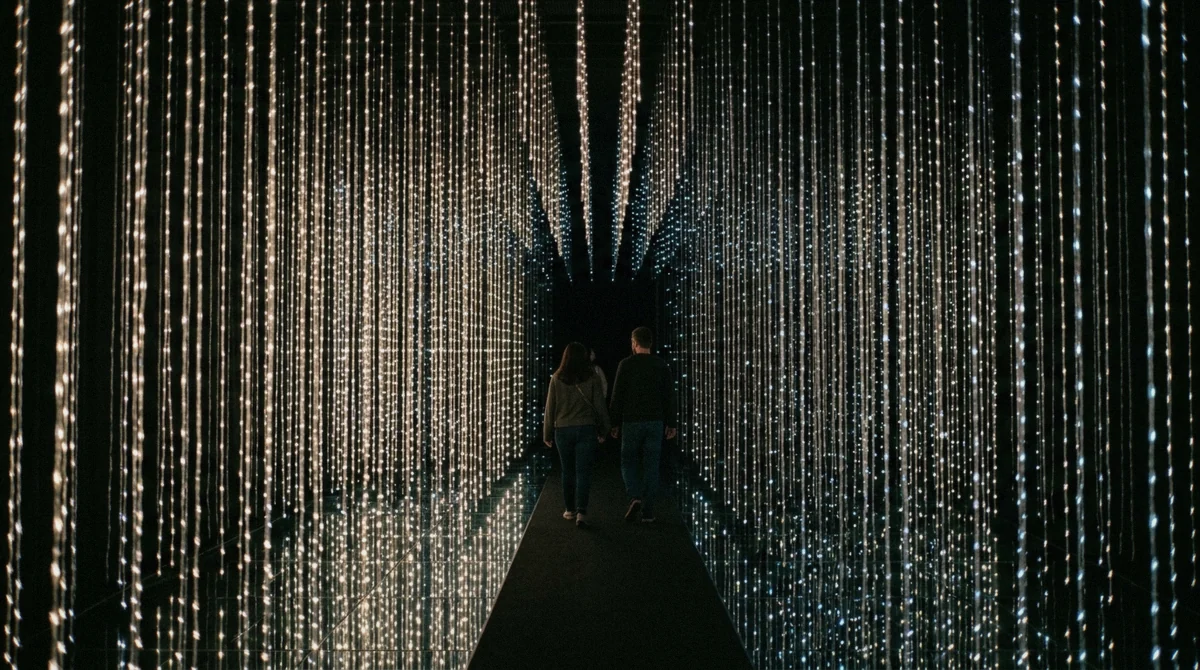
The rooms people queue for are Bubble Universe, a mirrored chamber of glowing orbs, and Infinite Crystal World, a hanging thicket of lights you walk directly into. On busy days Infinite Crystal World runs on numbered tickets you pull inside the teamLab app rather than a physical queue.
Why it moved, and what that means for your search results
The first Borderless opened in Odaiba in 2018 and took a Guinness World Record as the most-visited museum devoted to a single art group, with 2.2 million people through the doors in 2019 alone. Palette Town, the complex that housed it, was slated for redevelopment, and the museum closed in August 2022. It reopened in Azabudai Hills on 9 February 2024.
This matters because plenty of older pages, photos and even map pins still point at Odaiba. If a guide tells you to take the Yurikamome line, it was written before 2022. The museum is now a two-minute walk from Kamiyacho Station on the Hibiya Line, and the third teamLab venue in Tokyo, Planets in Toyosu, is a separate ticket in a separate part of the city.
In 2025 Borderless counted about 1.69 million visitors against 2.51 million at Planets. TIME put Borderless on its World's Greatest Places list for 2024.
What a ticket costs, category by category
Adult pricing is dynamic in two directions at once, which is the part most summaries get wrong. The date sets a band, and the entry time you choose inside that date moves the price by roughly ¥800. Cheapest weekday morning in a quiet month: ¥3,600.
Peak slot on a peak date: ¥5,600. Prices below were read off the official ticket flow on 3 August 2026, with dollar figures at ¥157 to the dollar.
| Ticket | Price | Who it is for |
|---|---|---|
| Adult Entrance Pass | ¥3,600 to ¥5,600 | 18 and over, fixed entry time, about $23 to $36 |
| Youth | ¥2,800 | 13 to 17 |
| Child | ¥1,500 | 4 to 12, about $9.50 |
| Infant | Free | 3 and under, must be with an adult over 18 |
| Student Summer Pass | ¥2,000 or ¥3,000 | Middle and high school ¥2,000, university and vocational ¥3,000, visits 18 July to 18 September 2026 only |
| Visitors with disabilities | ¥1,900 to ¥2,300 | With a certificate, covers one companion |
| Flexible Pass | ¥12,000 | No fixed slot, enter any time on the booked date |
Is the ¥12,000 Flexible Pass worth it
For most people, no. It buys one thing: freedom from the entry time. You still cannot re-enter, you may still wait at the door, at EN TEA HOUSE and at the busier artworks, and last entry is still an hour before closing. At roughly three times the cheapest adult ticket it makes sense if your day in Tokyo is genuinely unplannable, and not otherwise.
The better move for almost everyone is to book a fixed slot early and treat it as the fixed point the rest of the day is built around.
Guided Tours That Include teamLab Borderless Admission
Three private tours, each with the museum ticket and the timed slot inside the price. Booking one removes the two things people get wrong on their own: picking a slot before the good ones sell, and planning the rest of the afternoon around a museum you cannot re-enter.
 from $119.02Shortest — 3 Hours
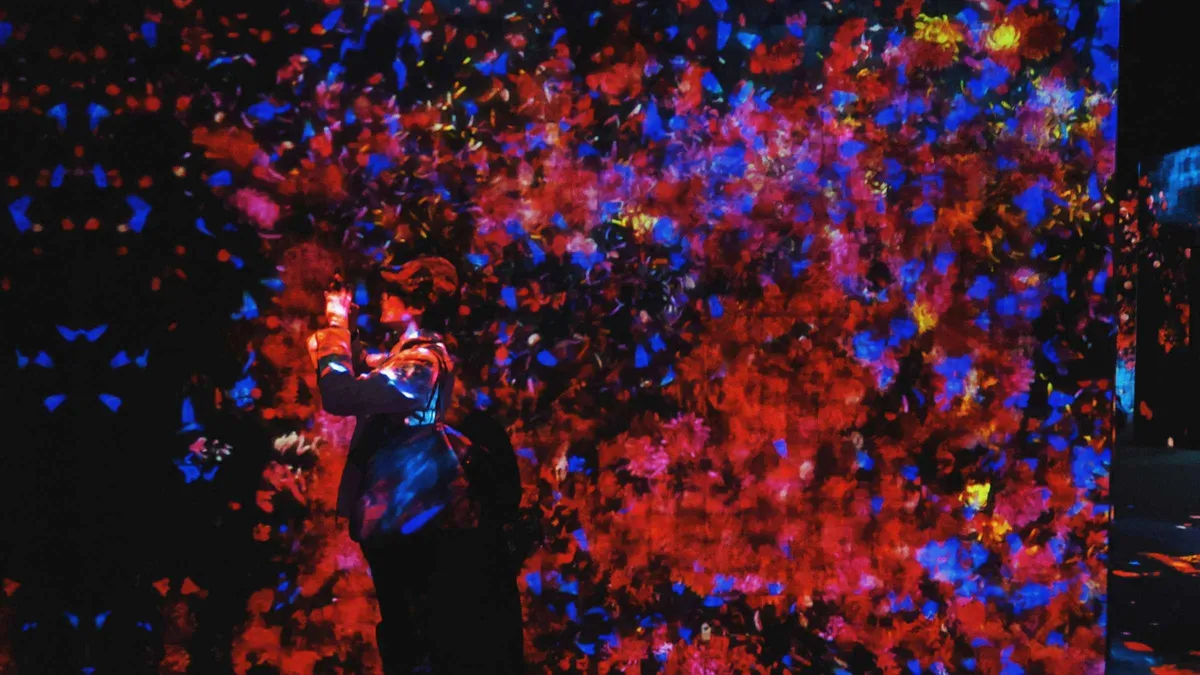
 teamLab Borderless & Imperial Palace East Gardens Walk
Ninety minutes inside teamLab Borderless, then a guided walk through the Imperial Palace East Gardens. Museum admission included; the quickest of the three routes.
Check Availability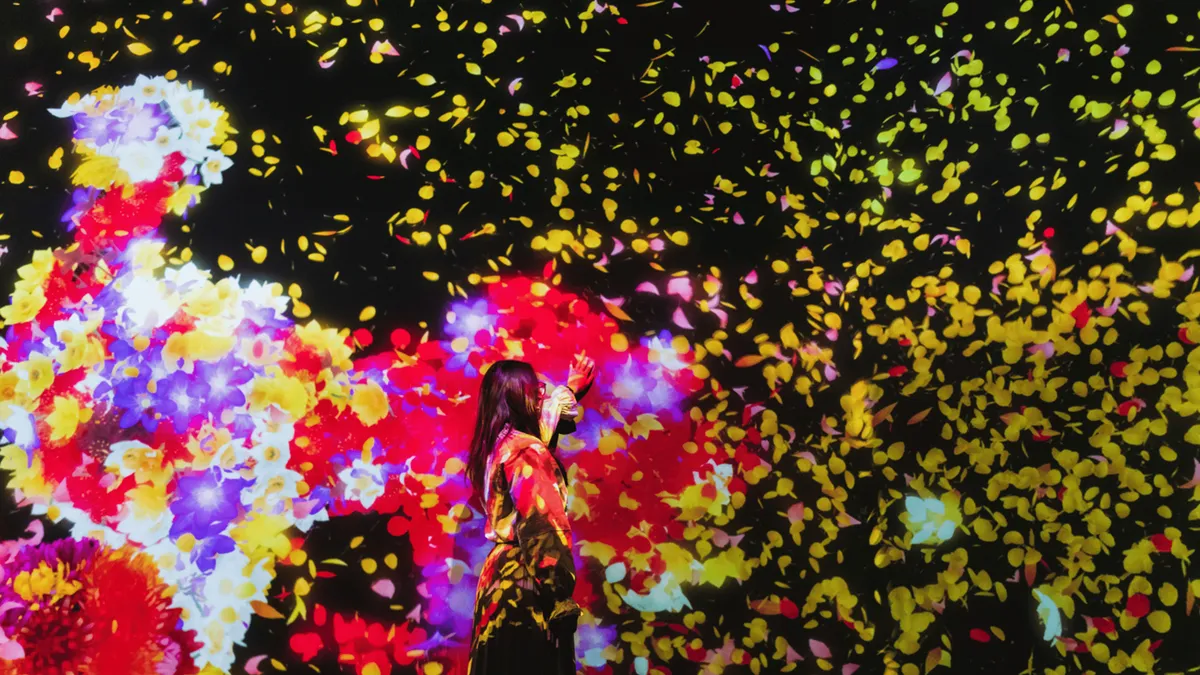 from $152.75Top Rated — 4.9★
 Azabudai Hills Art & Architecture Tour with teamLab Borderless
The one that explains the complex itself: Heatherwick's roof gardens and the Mori JP Tower plaza with a guide, then teamLab Borderless and the National Art Center.
Check Availability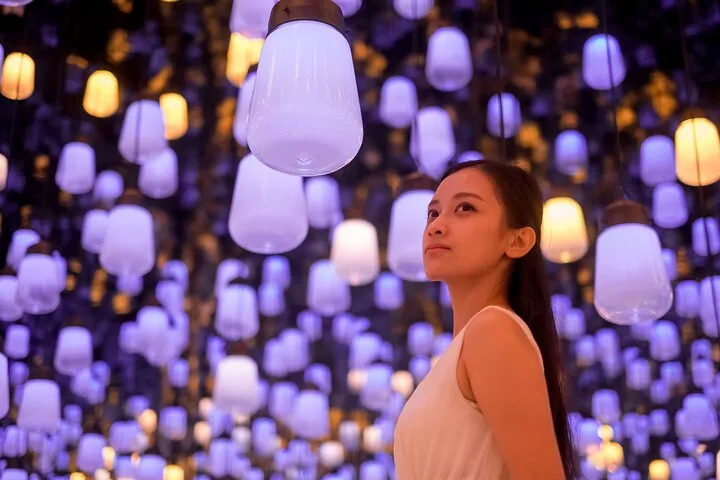 from $149.39Private Car Between Stops
 Morning Roppongi Art Route: teamLab, Maman and Kurokawa's Glass Wave
A Viator operator's morning route, a few dollars under the listing above: teamLab first, then Bourgeois's Maman spider at Roppongi Hills, ending at Kurokawa's glass facade.
Check AvailabilityThe Three Tours, Side by Side
Per adult, checked on 3 August 2026. Every one of them covers the ¥3,600 to ¥5,600 admission you would otherwise buy separately.
| Tour | Price | Length | Book | Rating | Where else it goes | Platform |
|---|---|---|---|---|---|---|
| teamLab and Imperial Palace East Gardens | $119.02 | 3 h | Check | 4.7 (24) | Imperial Palace East Gardens | GetYourGuide |
| Azabudai Hills art and architecture | $152.75 | 4 h | Check | 4.9 (17) | The complex itself, National Art Center | GetYourGuide |
| Morning Roppongi art route | $149.39 | 4 h | Check | 5.0 (3) | Roppongi Hills, National Art Center, private car | Viator |
All three cancel free up to 24 hours ahead and hold the museum slot for you.
Planning the Visit
The rooms worth waiting for
There is no route, so nobody can hand you an order to see things in. What you can do is know which spaces reward a wait rather than a photograph on the way past.
Bubble Universe is the one that ends up on everyone's camera roll: a mirrored room of glowing spheres that shift colour and appear to repeat outward without end. It runs an entry queue at busy hours, which is the price of it not being packed once you are inside.
Infinite Crystal World is a thicket of hanging light strands you walk directly into, controlled through the app rather than a physical queue on busy days. Pull a number early in the visit and come back to it.
The Universe of Water Particles waterfall is the survivor from Odaiba, a wall of falling light that breaks around anyone who stands in it. Flowers grow and die on the same surface across the year. Future Park, the children's section, has Sketch Ocean: colour in a fish on paper, hand it over, and it swims into the projected sea a minute later, which buys parents a genuinely useful twenty minutes.
- Bubble Universe: mirrored orbs, limited capacity, worth the queue.
- Infinite Crystal World: app-issued numbers on busy days, so claim one early.
- Universe of Water Particles: stand in the waterfall rather than photographing it.
- Future Park and Sketch Ocean: children draw a fish and watch it swim off.
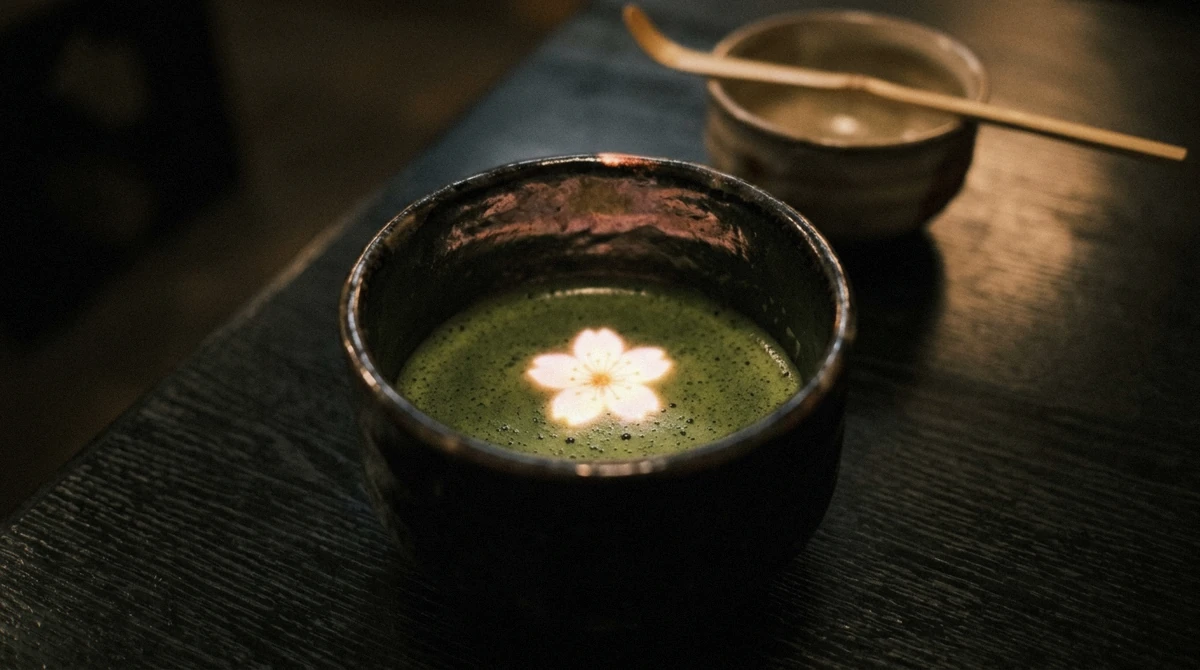
- EN TEA HOUSE: its own counter and its own wait, and the tea blooms in the bowl.
When to book and when to go
Tickets open two months in advance on the official site and the good slots go first, particularly across cherry blossom season and the November colour. Buying on the day is possible when the museum has not sold out, but the on-site price is higher than the online one, and a sellout on a Saturday is normal rather than unlucky.
The quietest visit is the first slot on a weekday. At 8:30 the mirrored rooms hold a handful of people and the photographs look like the marketing. By early afternoon on a weekend you are working around other visitors in every frame, and the popular rooms run a wait.
Check the calendar before you commit to a date. In 2026 the museum closes completely on Tuesday 25 August, Tuesday 8 September and Tuesday 20 October, shuts at 17:00 on 1 September, and runs late to 22:00 across 8 to 15 August and on many October dates.
Borderless or Planets: the honest split
They are not versions of the same museum, and the right answer depends on what you want the two hours to feel like.
Borderless has no route. Artworks leave their rooms, follow you down corridors and merge into each other, and you find things by wandering. It is the more cerebral of the two and the better one for anyone who likes being slightly lost. It also sits in Azabudai Hills, so the rest of the afternoon is already solved.
Planets, in Toyosu, is a fixed path and a physical experience: you go barefoot, wade through knee-deep water in a digital koi pond, and cross floors that give under your weight. Children and anyone travelling with them usually prefer it. It also drew 2.51 million visitors in 2025 against 1.69 million here, so book it further ahead.
If you only have time for one and you care about art, come here. If you are travelling with a seven-year-old, go to Toyosu.
- Pick Borderless for: no fixed route, the Bubble Universe and Crystal World rooms, a central location with dinner attached.
- Pick Planets for: barefoot, water, tactile floors, an easier win with young children.
- Both are teamLab, both take about two hours, and neither ticket works at the other.
The rules that catch people out
There is no re-entry. Leave for lunch and the ticket is spent, which is why the Azabudai Hills Market one floor up is an after, not a before. Inside there is no restaurant and no cafe beyond EN TEA HOUSE, where a digital flower blooms in the bowl and keeps blooming while tea remains in it. Vending machines cover water. Food from outside stays outside, drinks are fine.
Several rooms have mirrored floors. Skirts and dresses are a bad idea and the staff hand out wrap-around skirts to anyone who arrives in one. Photography and video are welcome and you can post whatever you like, but flash is banned and so is any support over 30 centimetres, which rules out tripods, monopods and selfie sticks.
Strollers are not allowed inside at all and go in the luggage room. Wheelchairs are admitted, though a few works cannot be reached, and the number of wheelchairs in the building at one time is capped, so a wait is possible. Children of elementary age or below need an adult of 18 or over, one adult for every five children.
How long you actually need
Two hours. The museum sells a timed entry but no exit time, and nobody rushes you out. People who allow an hour spend it walking briskly past things that were about to change.
Download the teamLab app before you arrive. It carries the concept behind whichever artwork is nearest you, which replaces the wall labels the museum refuses to print, and it issues the numbered tickets for Infinite Crystal World. Doubling back is worth it: a room you saw at the start will be running a different sequence by the time you leave.
The Light Sculpture - Flow space reopened on 8 July 2026 with a special exhibition, On the Asymmetry of the Universe, built around two new series. One sculpture of light exists in the room and casts no reflection; another exists only inside the mirror. It runs to 8 October 2026 and needs no extra ticket.
What to do with the two hours either side
The museum is one floor of a complex that costs nothing to walk, which is the part visitors miss when they arrive twenty minutes before their slot and leave straight afterwards.
Before: come an hour early and walk the Heatherwick low-rise, the planted terraces and Central Green above you. On a fine day the free half of Azabudai Hills is a better hour than most paid attractions in Minato.
After: eat at the Azabudai Hills Market in the Garden Plaza C basement, one level up and two minutes away, where bento and deli counters start around ¥400. Then take the S2 lift to Sky Room on 34 for the Tokyo Tower view, which costs ¥500 plus a drink since the free 33rd-floor deck closed in April 2024.
If you would rather someone else stitched that together, the 4-hour art and architecture tour does the complex first and the museum second, and finishes at the National Art Center.
Getting there
Exit 5 of Kamiyacho Station on the Tokyo Metro Hibiya Line is two minutes away, and an underground passage runs from the station into Garden Plaza B, so in July heat or January wind you never surface. Exit 4 of Roppongi-Itchome on the Namboku Line is six minutes on the same passage. From Roppongi Station itself, allow ten minutes above ground.
The museum has no car park. Drivers use the Azabudai Hills P6 lot, take the D lift to B1, and the entrance is immediately on the left. Show the parking ticket at the information counter with an online ticket for a discount.
The address for a taxi driver: 麻布台ヒルズ ガーデンプラザB B1, 東京都港区麻布台1-2-4.
Where the Museum Is
Garden Plaza B sits on the west side of the Azabudai Hills site. Kamiyacho Exit 5 is the entrance to aim for; the underground passage is signposted to the museum the whole way.
- teamLab Borderless Garden Plaza B, B1, timed entry from ¥3,600
- Kamiyacho Station, Exit 5 Hibiya Line, 2 minutes, underground the whole way
- Roppongi-Itchome Station, Exit 4 Namboku Line, 6 minutes on the same passage
- Azabudai Hills Market Garden Plaza C, B1, where to eat after
- Azabudai Hills P6 car park D lift to B1, discount with an online ticket
Questions People Ask Before Booking
Which is better, teamLab Planets or Borderless?
Different experiences rather than better and worse. Borderless has no set route: the artworks wander between rooms, chase each other and change while you watch, and you navigate by curiosity. Planets in Toyosu is barefoot and physical, with a fixed path that takes you through knee-deep water and across floors that sink under you. Adults who want to be absorbed by art tend to prefer Borderless; families with young children almost always prefer Planets. Planets drew 2.51 million visitors in 2025 against 1.69 million here, so it books out further ahead.
Which teamLab is better in Tokyo?
For a first visit with limited time, Borderless, on two practical grounds beyond the art. It sits inside Azabudai Hills, so lunch, the gardens and the 33rd-floor view are a few minutes away, and it is two minutes from a Hibiya Line exit. Planets is a dedicated trip to Toyosu and you will be barefoot and partly wet for it, which is either the appeal or the problem depending on who you are travelling with.
Is teamLab Borderless worth the hype?
For anyone with an interest in art, light or photography, yes. The rooms do something no photograph conveys, and the fact that the works move between spaces means the museum you walk out of is not the one you walked into. Two caveats. It is expensive for what is roughly two hours, at ¥3,600 to ¥5,600 for an adult. And it is at its worst crowded, when you spend the visit waiting for people to leave the frame, so a weekend afternoon ticket buys a weaker version of the same museum than a weekday morning does.
How long does it take to walk through teamLab Borderless?
About two hours for a proper visit. Your ticket fixes an entry time but not an exit, and the museum sets no limit on how long you stay. Walking it briskly takes under an hour, and that is the version people describe as overrated: many works run on cycles of several minutes, so standing still is part of seeing them. Allow time to double back, because rooms you passed early on will be doing something else later.
What is the best time to visit teamLab Borderless?
The first slot on a weekday, 8:30 or 9:00. The mirrored rooms are near empty, the photographs come out the way the marketing promises, and Infinite Crystal World rarely needs a numbered ticket that early. The worst is a weekend afternoon in cherry blossom or autumn colour season. Evening slots are a decent compromise if mornings are impossible, since the late crowd thins after about 19:00.
How much are teamLab Borderless tickets in 2026?
Adults 18 and over pay ¥3,600 to ¥5,600, about $23 to $36, with the date setting the band and the entry hour moving it roughly ¥800 inside that date. Ages 13 to 17 pay ¥2,800, children 4 to 12 pay ¥1,500, and under 4 enter free with an adult. Holders of a disability certificate pay ¥1,900 to ¥2,300 including one companion. A Flexible Pass with no fixed entry time costs ¥12,000. Students visiting between 18 July and 18 September 2026 can use the Summer Pass at ¥2,000 for middle and high school or ¥3,000 for university and vocational study.
When is teamLab Borderless closed?
Regular hours are 8:30 to 21:00 with last entry an hour before closing. In 2026 the museum closes completely on Tuesday 25 August, Tuesday 8 September and Tuesday 20 October, and closes early at 17:00 on 1 September. It stays open to 22:00 from 8 to 15 August and on a long list of October dates. The official calendar changes, so check it against your date before booking flights around it.
Should I buy tickets on Klook or the official site?
The official site sells every category, handles date changes up to three times per ticket and is the only place that issues the Flexible Pass. Resellers such as Klook occasionally price adult entry below the official rate for a given day, which is worth checking if your date is flexible, but changes and refunds then follow that platform's rules rather than teamLab's. Either way, buy before you arrive: on-site tickets cost more and sell out.
Can you re-enter teamLab Borderless?
No. Once you leave, the ticket is finished, and there is no restaurant inside beyond EN TEA HOUSE. Eat first or eat after at the Azabudai Hills Market one level up in Garden Plaza C. Outside food cannot come in with you; drinks can.
Is teamLab Borderless good for kids?
Yes, with two caveats. Strollers are banned inside and go to the luggage room, and children of elementary age or younger need an accompanying adult of 18 or over, one per five children. The Future Park section is built for children to draw and play in, and the ¥1,500 child rate for ages 4 to 12 keeps a family visit reasonable. Families with toddlers often get more out of teamLab Planets, where wading and touching are the point.